Why Valorant Satisfying Clips Beat Raw Highlights for Improving Your Aim
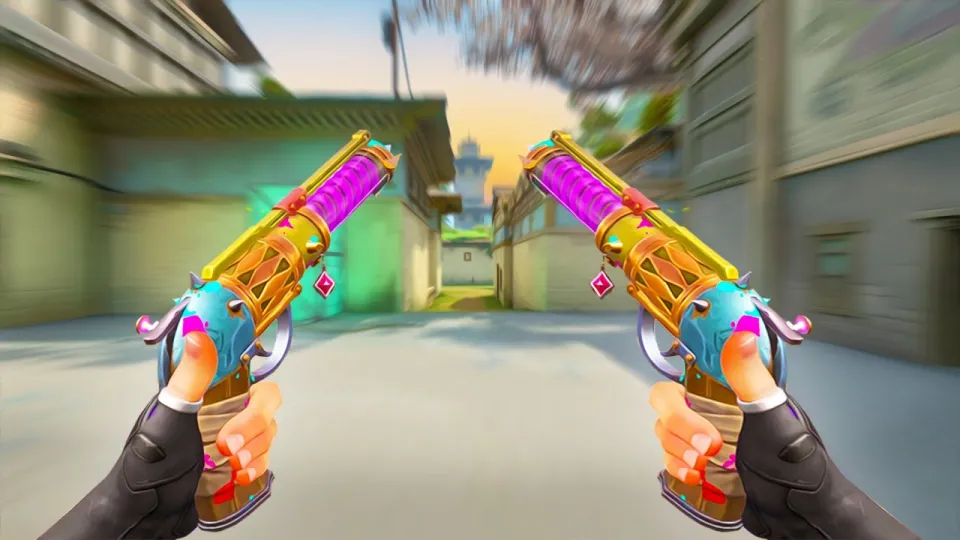
Video: 20 Minutes of Satisfying Valorant Clips
You can order the same kind of articles for your own video to boost it on YouTube and Google. Just message the Telegram bot @sat_sit_bot. It writes articles around your video, embeds the video and publishes them on popular niche websites (no ads). Your first 50 articles are free.
· based on the channel Rawzu
Satisfying Valorant clips beat raw highlight reels for improving your aim because they isolate clean movement, crosshair placement, and ability timing instead of burying them under chaotic team fights. Rawzu's "20 Minutes of Satisfying Valorant Clips" is a case study: twenty minutes of Phoenix duelist play on stretched resolution, built on one-taps, Blaze walls, and Curveball blinds that are easy to study and copy. If you want to watch the same player live and see those habits in real matches, the daily streams run at Kick.
The clip set is not a highlight montage in the usual sense. It is a rhythm piece: movement, gunplay, and ability usage repeated until the pattern becomes obvious. That repetition is exactly what makes it useful for players who want to translate watching into playing.
Why satisfying Valorant clips teach more than raw highlights
A satisfying clip compresses a decision into a few seconds: where the crosshair sat, how the peek was timed, which ability opened the fight. Raw highlights often skip the setup and show only the explosion of kills, which leaves nothing to imitate. Rawzu's Phoenix footage works because the setup is visible. The Blaze wall goes down before the swing, the Curveball lands before the entry, and the Vandal one-tap finishes what the utility started. Viewers in the comments describe the same effect: the movement speed is hard to track, the aim looks unreal, and the urge to queue a match arrives immediately. That is not a coincidence. Clean clips lower the gap between what you see and what you can attempt in your next game.
Rawzu's settings and crosshair explained
Rawzu plays at 400 DPI with 0.625 in-game sensitivity, which lands around 250 eDPI, a range common among precision-focused duelist players. The resolution is 1440x1080 stretched, a 4:3-style aspect ratio that widens enemy models on screen at the cost of horizontal field of view. The crosshair code is 1-6-2-2, a compact setup that keeps the center of the screen readable during fast peeks. The hardware list is equally specific: a Lamzu Maya X mouse, a Zowie H-SR-SE 2 Blue mousepad, and a Zowie XL2566K monitor running at 360Hz. Each piece matters for a different reason:
- Low eDPI keeps micro-adjustments small, which suits Phoenix's close-range duels.
- Stretched resolution makes strafing targets wider, which helps tracking during Hot Hands rushes.
- A 360Hz panel reduces the delay between a flick and the visual confirmation of the hit.
- A control-focused pad supports stopping power on one-taps rather than raw glide speed.
Copying the numbers alone will not fix your aim, but matching sensitivity and resolution removes one variable while you work on crosshair placement.
How Phoenix's kit turns clips into clean plays
Phoenix is an offensive duelist built to hunt enemies while crippling their ability to shoot back, and his kit explains most of what happens in a satisfying montage. Blaze creates a wall that blocks vision and deals damage, letting Phoenix cross open ground that would otherwise be watched. Curveball blinds enemies even when they are tucked behind corners, which is why so many entries start with a flash that curves around cover instead of over it. Hot Hands adds area damage and heals Phoenix when he stands in his own fire, extending fights he should lose. Run it Back, the ultimate, marks a position and returns Phoenix there with full health if he dies during the window, which makes aggressive first contacts nearly free. Together the four abilities create a loop: wall, blind, burn, entry, reset. When that loop is executed quickly, the result reads as satisfying rather than lucky.
Maps, rounds, and moments viewers keep replaying
Lotus and Icebox anchor much of the footage, and both maps reward the Phoenix loop. Lotus offers narrow chokes where a Blaze wall splits a site into two separate fights, while Icebox's vertical angles make Curveball blinds unusually valuable around tube and nest positions. Commenters single out specific beats rather than whole rounds: a one-tap on Clove that they call the most satisfying moment they have seen in Valorant, a Sage player caught mid-ability, a teammate shouting about a stolen ace, and a round-two loadout with a Vandal plus full shield that raised eyebrows about economy. The support from teammates stands out too, with viewers noting that the squad sounds unusually encouraging, including one dry line about hoping to get a particular opponent. Those small human moments are part of why the twenty minutes hold attention: the gunplay is the hook, but the reactions keep you watching.
Common questions from viewers answered
Viewers keep returning to the same practical questions, so it helps to address them directly. Sensitivity and DPI come up constantly, and the answer is 400 DPI with 0.625 in-game sensitivity. Peripherals are another recurring request, covered by the Lamzu Maya X, Zowie H-SR-SE 2 Blue, and Zowie XL2566K at 360Hz. Some players joke that their own lobbies feature enemies who shoot back and use game sense, which is a fair reminder that clips are curated: you see the rounds that worked, not the ones that ended in a trade. Others mention that watching this kind of footage at 3 a.m. makes them want to queue immediately, and a few say their own aim feels better after a session of watching. Treat that as a warm-up effect, not a substitute for practice. Finally, the stretched resolution and crosshair code are easy to replicate, but give them at least a week before deciding whether they suit your hands.
Useful links
- Live streams: https://kick.com/rawzu
- Original music: https://open.spotify.com/artist/6DbATPR1PTNMx7U918bg1Q
- Second channel: https://www.youtube.com/@rawzuV2
- Discord community: https://discord.gg/axnFwyvxp3
What to take away from this breakdown
Satisfying Valorant clips are worth more than entertainment when the player's habits are legible, and Rawzu's Phoenix footage is legible by design. The value comes from three things you can copy: a stable sensitivity and stretched resolution, an ability order that opens every fight, and crosshair placement that stays at head level through movement. Watch one round at a time, pause before each peek, and predict where the crosshair should be. For live proof that the same patterns hold in ranked, follow the daily streams on Kick, and treat the channel Rawzu as the source of this breakdown rather than a substitute for your own practice.
Key takeaways
- Rawzu's "20 Minutes of Satisfying Valorant Clips" runs 20 minutes of Phoenix duelist gameplay built on movement, one-taps, and clean ability combos.
- Rawzu's setup: 400 DPI at 0.625 in-game sensitivity, 1440x1080 stretched resolution, crosshair code 1-6-2-2, Lamzu Maya X mouse, Zowie H-SR-SE 2 Blue pad, Zowie XL2566K 360Hz monitor.
- Phoenix combines Blaze vision-blocking walls, Curveball corner blinds, Hot Hands healing, and the Run it Back ultimate for aggressive, durable duels.
- Maps shown in the clip set include Lotus and Icebox, with highlights on Vandal gunplay, Sage and Clove interactions, and Swiftplay rounds.
- Viewers repeatedly note that watching clean movement and aim inspires them to queue Valorant immediately, even at 3 a.m.
Questions & answers
What sensitivity and DPI does Rawzu use in these Valorant clips?
Rawzu runs 400 DPI with 0.625 in-game sensitivity, roughly 250 eDPI. That range favors small, controlled micro-adjustments over large flicks, which suits Phoenix's close-range duels. Pair it with a control mousepad if you want stopping power on one-taps.
Is stretched resolution like 1440x1080 actually better for Valorant?
Stretched 1440x1080 widens enemy models on screen, which can make strafing targets easier to track, but it also cuts horizontal field of view. It is a preference, not an upgrade. Try it for a week in deathmatch before committing, and keep your crosshair placement as the priority.
Why do these clips look so much cleaner than my own lobbies?
Clips are curated from the rounds that worked, so you never see the trades and lost duels. Enemies in a montage are also often caught mid-ability or out of position, which is exactly what Phoenix's Blaze and Curveball create. Use the footage to study setup and timing, not as a realistic picture of ranked.
Does watching satisfying Valorant clips really improve your aim?
Watching can help if you study details: crosshair height, peek timing, and ability order before each entry. Passive viewing mostly builds the urge to queue. A short clip session as a warm-up, followed by deathmatch, converts what you saw into repeatable habits.
Source: 20 Minutes of Satisfying Valorant Clips · Markdown version